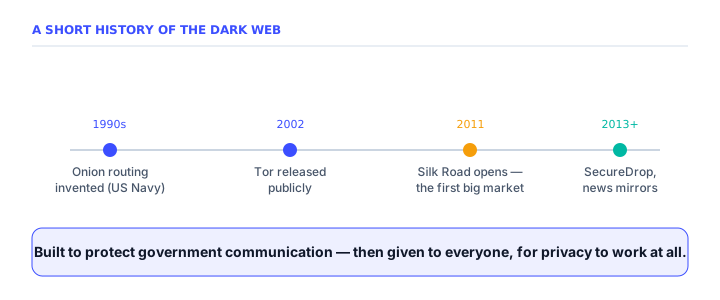
The dark web began with onion routing, invented by US Naval Research Laboratory researchers in the 1990s to protect government communications. It was released publicly as Tor in 2002 — because anonymity only works with a crowd, the tool had to be shared with everyone. Silk Road made it infamous in 2011; SecureDrop and news mirrors made it valuable to press freedom.
- Onion routing was invented by US Navy researchers in the 1990s
- Released publicly as Tor in 2002
- Anonymity needs a crowd — so it had to be shared with everyone
- Silk Road (2011) began the marketplace era
- SecureDrop and news mirrors made it press-freedom infrastructure
The dark web's origin story is the opposite of what most people expect. It wasn't built by criminals or hackers — it was created by the US government, and the reason it was given away to the public is the key to understanding why it exists at all.
Naval research origins
In the 1990s, researchers at the US Naval Research Laboratory developed onion routing to protect intelligence communications online. The problem they faced was subtle: even encrypted messages reveal who is talking to whom, and for intelligence work, that metadata can be as damaging as the message itself. Onion routing hid it by bouncing traffic through multiple relays.
The anonymity paradox
Here's the crucial insight. A government anonymity network used only by government agents would be useless — anyone observing it would know every user was a spy. Anonymity requires a crowd. To protect their own people, the researchers had to share the tool with everyone, so that government traffic would blend into a sea of ordinary users. This is why the technology was released publicly as Tor in 2002, and why it remains open to all.
The paradox in one line: a private anonymity network is a contradiction. To hide anyone, it has to hide everyone.
Silk Road and the market era
In 2011, Silk Road became the first major dark web marketplace, pairing Tor's anonymity with Bitcoin's pseudonymous payments. Its 2013 takedown made the dark web infamous and began the endless cycle of markets rising and falling that continues today.
The other half of the story
Alongside the markets, the dark web became infrastructure for press freedom. SecureDrop, launched in the 2010s, let sources send documents to journalists anonymously, and major newsrooms like the BBC and New York Times run onion mirrors so readers under censorship can reach them. This is the half that rarely makes headlines — and it's why the technology is defended by serious people despite also hosting crime.
Frequently asked questions
Who created the dark web?
Researchers at the US Naval Research Laboratory developed onion routing in the 1990s to protect government communications. It was later released publicly as Tor in 2002 and is now maintained by the non-profit Tor Project.
Why was the dark web created?
To protect intelligence communications by hiding not just message contents but who is talking to whom. Because a government-only anonymity network would expose its users, the tool had to be shared publicly so government traffic could blend into a crowd.
When did the dark web start?
Onion routing was invented in the 1990s and Tor was released publicly in 2002. The dark web became widely known after Silk Road launched in 2011 and was taken down in 2013.
What was Silk Road?
The first major dark web marketplace, launched in 2011, which paired Tor's anonymity with Bitcoin payments to sell drugs and other goods. Its 2013 seizure and the life sentence of its founder made the dark web infamous.
Is the dark web only used for crime?
No. It began as a government privacy tool and remains infrastructure for press freedom — SecureDrop lets sources contact journalists anonymously, and major newsrooms run onion mirrors for readers under censorship.